 It is unfortunate that many companies still leave risk management and business continuity to security professionals, business continuity planners or insurance professionals. So say Yossi Sheffi and James B Rice in their 2005 article A Supply Chain View of the Resilient Enterprise. It is unfortunate that it is this way, because building a resilient enterprise is an enterprise-wide undertaking that is about so much more than simply preparing a company for disruptions.
The Resilient Enterprise
A resilient company will change the way it operates, and thus increase its competitiveness. But how? In 2005 Yossi Sheffi published the book The Resilient Enterprise: Overcoming Vulnerability for Competitive Advantage and this article serves as an executive summary of the highlights in his book. If you don’t have access to the book, this article is an excellent substitute.
The Disruption Profile
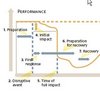
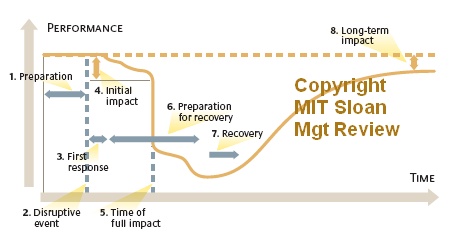 At the center stage of the article is the disruption profile. This is tell-tale illustration of what happens when supply chains are disrupted and businesses are impacted. They may, or may not, be able to bounce back to where they were before the event. The survivability of the company depends solely on the company’s resilience towards the disruption. Sheffi sees flexibility and redundancy as the key ingredients to achieve this resilience. That said, he wasn’t the first to come with this. In a 1997 article, Stefan Einarsson and Marvin Rausand used in in building a framework for vulnerability analysis of complex industrial systems.
Vulnerability Assessment
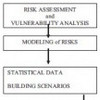
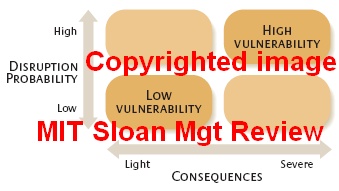 Sheffi uses the traditional approach towards vulnerability, as a function of probability and consequences. Vulnerability is highest when both the likelihood and the impact of disruption are high. Rare, low-consequence events represent the lowest levels of vulnerability and require little planning or action.
Market position and responsiveness
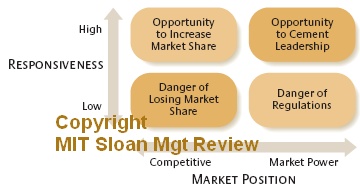 A company’s resilience is a function of its competitive position and the responsiveness of its supply chain. This responsiveness or switching ability is determined by two parameters, redundancy and flexibility.
Redundancy and Flexibilty
Redundancy is the familiar concept of keeping some resources or safety stock in reserve to be used in case of a disruption. However, there is significantly more leverage in making supply chains flexible than there is in adding redundancy. Flexibility is building organic capabilities that can sense threats and respond to them quickly.
Five Facets of Flexibility
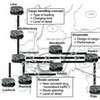
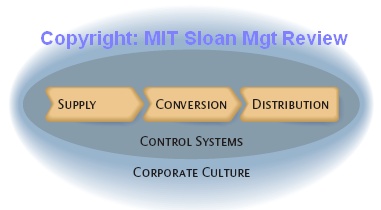 Flexibility needs to pervade the whole supply chain in order to gain full organizational resilience and Sheffi identifies five elements where flexibility can be injected: supply, manufacturing and production (which he calls conversion), distribution, control (and decision) systems and the wider corporate culture.
Gauging the magnitude of a large disruption early requires a mindset that continuously questions prevailing wisdom and a culture that allows “maverick” information to be heard, understood and acted upon.
Conclusion
I am not sure I follow Sheffi’s and Rice’s thoughts to the full, since we appear to have a different view on key terms such as robustness, flexibility and resilience, which I have attempted to clarify in my recent article, that also includes agility, where I try to de-confuse these four terms:
Sheffi sees flexibility as a way to achieve resilience, stating that instead of relying solely on supply chain redundancy, a well-managed firm should develop resilience, by building flexibility that can be used to ‘bounce back’ from disruptions. To me, that would rather be agility than flexibility.
Differences in semantics aside, the important issue, and I agree with Sheffi here, is that flexibility garners benefits and operational efficiencies also in the normal course of business. In that respect the article makes a brilliant argument for why flexibility should be part of business operations planning.
Reference
Shefi, Y., & Rice, J.B. (2005). A Supply Chain View of the Resilient Enterprise MIT Sloan Management Review, 47 (1), 41-48
Author links
- linkedin.com: James B Rice
- linkedin.com: Yossi Sheffi
Download
- Read the full article: A Supply Chain View of the Resilient Enterprise (pdf)
Related
- husdal.com: Book Review – The Resilient Enterprise
- husdal.com: Robustness, Resilience, Flexibility and Agility