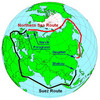
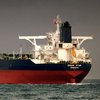
 Yesterday I cited the press release of the Norwegian shipping company Odfjell, which no longer will send their tankers through the Suez Canal, but take the long route around Africa instead, hoping to avoid being hijacked by pirates. Maybe just in the nick of time, because now a supertanker full of crude oil has been hijacked by Somali pirates several hundred miles out to sea.
According to the British newspaper The Guardian, the Sirius Star, a Saudi supertanker, was captured as far out as 450 miles (725km) south-east of the Kenyan port of Mombasa.
The hijacking is likely to send shudders through the shipping industry. Insurance premiums for companies using the Gulf of Aden have soared this year as Somalia leapt to the top of world piracy charts. So lucrative is the crime – a typical western-owned ship can fetch more than £1m – that there are now at least five Somali pirate gangs employing more than 1,000 gunmen, according to the East African Seafarers’ Association in Mombasa.
Between July and September there were 47 attacks off Somalia’s coast, the longest in Africa, and 26 were successful. But the attack on the Sirius Star shows that the pirates’ reach now extends far beyond Somali waters.
If this continues, does it mean that we can now expect serious problems with our oil supply? I’m just asking, and The Telegraph is already thinking along the same lines.
The impact of the hijacking can be seen from the fact that it moved the world’s oil markets yesterday. At first the cost of crude was falling, but once news of the seizure emerged those losses were put into reverse and by the end of the day the oil price was up.
The pirates may have seen the Sirius Star as a ticket to a ransom in the tens of millions of pounds, but there is also the possibility that the seizure indicates more geo-strategic thinking among some factions in war-torn Somalia, which Western intelligence services have long seen as a safe haven for Islamist terror groups.
For anyone bent on attacking the economies of the developed world, striking at the oil trade which fuels them would be a major opportunity.
For decades, when the strategically vital Strait of Malacca between Indonesia and Malaysia was the world’s worst piracy hot spot, analysts warned of the risk of terrorists seizing a tanker and sinking it in the area’s shallow waters. Blocking the artery through which a third of the world’s seaborne trade passes would have dealt a huge blow to the world economy.
Crippling, even hampering, the global flow of crude oil, by forcing tankers to take longer routes and pushing up costs, could potentially have similar effects.
Considering how dependent the Us and much of the Western world is on oil, is Somalia enroute to becoming the next “theatre” for the war on terrorism?
Related
- husdal.com: The threat of Somali pirates force shipping companies to take the long route
- husdal.com: Thanks to Somali pirates Santa will not be coming this year?
- husdal.com: Can Somali pirates bring down European supply chains?
- husdal.com: Piracy at sea – is your supply chain at risk?
Links
- Dagbladet – Nytt skip kapret ved kysten av Afrika
- Dagbladet – Umulig å bekjempe somaliske pirater
- Dagbladet – Søkkrike sjørøvere i Somalia
- VG – Kapret oljetanker ankret opp i Somalia
- VG – Piratene krever løsepenger
- The Guardian – Supertanker Sirius Star hijacked by pirates
- The Telegraph – Navies consider their response
- BBC News – Somali pirates growing bolder
- Chatham House – Piracy in Somalia: Threatening Global Trade
- International Maritime Bureau – Live Piracy Attacks Map