 Today, on this ominous date, Friday the 13th, Norway’s government is presenting it’s development plans for the Norwegian transport infrastructure for 2010 to 2019 (Nasjonal Transportplan 2010-2019). Not that it will make much difference, because the way we do things here, instead of the national or regional government deciding where and what to build or not to build, Norway’s planning and decision process involves even the local governments, who essentially can veto (or at best significantly alter) any plans made the government or other higher authorities. Some call it madness , and I am inclined to agree.
I hope for the best, but I fear the worst
 Norway’s transport infrastructure is way behind much of Europe, as regular readers of this blog may know already, if you have read these posts. And despite the governments announced plans, and some small leaks to tease the public, I’m afraid it will stay like this unles we change our planning and decision regime to that of other countries, where the government allots money, and leaves the implementation to a central or regional authority, without any interference from lobbying local politicians. Just shedding out more money will not help.
Road, rail, sea or air?
 What we all are waiting for is which mode of transportation that will receive the most money, road, rail, sea or air? Environmentalists want rail, or public transport/mass transit, most people, however, just want better roads. So far, prior to making the development plan public, the only thing the government is saying is that it wants to tie Norway closer together, North-South, and East-West, whatever that may mean.
Travel time
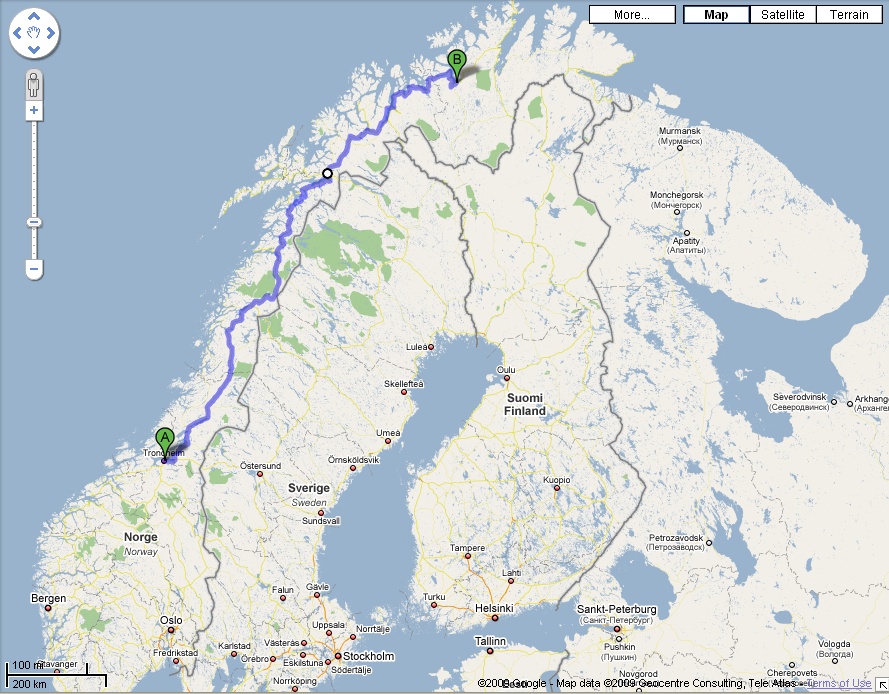 One of the more peculiar leaks from the development plan has been the promise to reduce the travel time between Trondheim and Alta by 1 hour and 15 minutes. I am not sure what that implies, but it is a distance of 1370 kms, according to GoogleMaps, and reducing the travel time by 1 hour and 15 minutes would mean that the average speed increases from 67 km/h to 71 km/h. Not much maybe, or is it?
Links
- This blog: All posts tagged “samferdsel”
- dagbladet.no: Satser på dobbeltspor og europaveier
- aftenposten.no: Køer i vente i storbyene
- vg.no: Kutter reisetiden mellom byer
- tv2.no: Her er transportlekkasjene