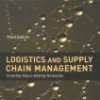
Book Review: Logistics and Supply Chain Management

This book by Martin Christopher, Logistics & Supply Chain Management, is one of the better if not among the best books on supply chain management. Written by Professor Martin Christopher of the Cranfield School of Management, the book deals particularly with best practices in supply chain management in the current era of globalization. Responsiveness, reliability and relationships are the basis for successful logistics and supply chain management. Strategies like Just-In-Time (JIT), Lean and Agile thinking are reviewed, and last not least, there is a chapter on supply chain risk.

Better than van Hoek and Harrison?

I prefer Logistics Management and Strategy by van Hoek and Harrison to this book. That said, while Christopher’s book has lesser compelling graphics and looks less like a textbook, it is one of the very few supply chain textbooks that deal with supply chain risk.

Read online

Reference

Christopher, M. (2005). Logistics and Supply Chain Management. Harlow: Prentice Hall.


Author Link

amazon.com

Related

Posted in BOOKS and BOOK CHAPTERS
Tags: , , ,

ARTICLES and PAPERS
Supply chain vulnerability and resilience
Today's post is a review of a conference paper written by Francesco Longo and Tuncer Ören in 2008 an[...]
MBA - Major Bad Ass?
Are business schools bad for business? I recently came across a very interesting article by the late[...]
BOOKS and BOOK CHAPTERS
Book Review: Managing Risk and Resilience in the Supply Chain
This book is a gem. To me. Where Helen Peck in her article Reconciling supply chain vulnerability, r[...]
Supply Chain Risk - Jetzt auch auf Deutsch
Unbeknown to me - or perhaps I really should have known better - there appears to be a large body of[...]
REPORTS and WHITEPAPERS
The UK Transport Network Resilience...and I
UK Transport Network Resilience
For a budding and even for a seasoned researcher, nothing is more rewarding than to have one's publi[...]
Zycus and the Supply Risk Explosion
"Ten or fifteen years ago, you could not convince most procurement and supply-chain professionals to[...]