 Regular readers of this blog may have noticed my regular rants about the state of the Norwegian infrastructure, and roads in particular. Now, aftenposten.no reports that there is some support from the Global Competitiveness Report by the World Economic Forum. In overall infrastructure quality, Norway ranks 28/134, behind many other European countries, which is not too bad, but when it comes to road quality, Norway ranks 48/134, even behind countries such as Namibia (23/134), Tunisia (39/134) and Botswana (44/134). This is not good news.
Why is road quality important for competitiveness?
Let me cite from the report:
Extensive and efficient infrastructure is an essential driver of competitiveness. It is critical for ensuring the effective functioning of the economy, as it is an important factor determining the location of economic activity and the kinds of activities or sectors that can develop in a particular economy.
Effective modes of transport for goods, people, and services—such as quality roads, railroads, ports, and air transport—enable entrepreneurs to get their goods to market in a secure and timely manner, and facilitate the movement of workers to the most suitable jobs.
Infrastructure is important, but how important is it really? Are roads more important than computers?
Norway’s predicament
This is how it looks like for Norway’s infrastructure (rank out of 134)
Quality of overall infrastructure……………………………28
Quality of roads……………………………………………………48
Quality of railroad infrastructure …………………………31
Quality of port infrastructure………………………………12
Quality of air transport infrastructure…………………10
Quality of electricity supply ………………………………10
The air transport ranking is unsurprising, given the fact that Norway maintains close to 50 airports serving less than 5 million people. The road quality, however, is a different story.
A constrained infrastructure?
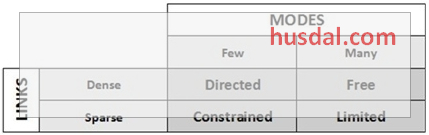
Not only the state of transportation infrastructure, but also the access to transportation is a problem for Norway. In a paper I presented at TRB 2009, Does location matter – Supply chain disruptions in sparse transportation networks, I suggested a new framework for the categorization of transportation networks based on the number of transportation modes and links available:
Sidenote: about the report
The Global Competiveness Index GCI is based on 12 pillars of competitiveness, providing a comprehensive picture of the competitiveness landscape in countries around the world at all stages of development. The pillars include: Institutions, Infrastructure, Macroeconomic Stability, Health and Primary Education, Higher Education and Training, Goods Market Efficiency, Labour Market Efficiency, Financial Market Sophistication, Technological Readiness, Market Size, Business Sophistication and Innovation.
The rankings are calculated from both publicly available data and the Executive Opinion Survey, a comprehensive annual survey conducted by the World Economic Forum together with its network of Partner Institutes (leading research institutes and business organizations) in the countries covered by the report.
The report contains a detailed country/economy profile for each of the 134 economies featured in the study, providing a comprehensive summary of the overall position in the rankings as well as the most prominent competitive advantages and disadvantages of each country/economy based on the analysis used in computing the rankings.
Links
- World Economic Forum: World Competitiveness Report
- aftenposten.no: Norsk veistandard på bunn i Europa