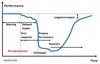
 There is a figure in the book The Resilient Enterprise: Overcoming Vulnerability for Competitive Advantage by Yossi Sheffi that every supply chain risk manager (or even every CEO for that matter) should take note of: the disruption profile. This is tell-tale illustration of what happens when supply chains are disrupted and businesses are impacted. They may, or may not, be able to bounce back to where they were before the event. The survivability of the company depends solely on the company’s resilience towards the disruption.
Not the first?
The curve in this figure is the same as can be seen in the New Zealand project Resilient Organizations , also a project worth taking note of.
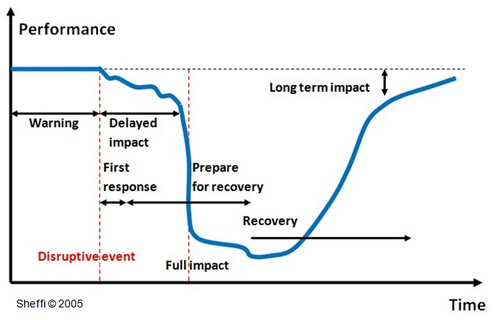
Sheffi's Disruption Profile
It is also the same as in Bjørn Egil Asbjørnslett and Marvin Rausand (1997) Assessing the vulnerability of your productions system, or in Stefan Einarsson and Marvin Rausand (1997) An Approach to Vulnerability Analysis of Complex Industrial Systems written 10 years before Sheffi wrote his book.
Links
- www.resorgs.org.nz: Resilient Organisations
Related
- husdal.com: Assessing the vulnerability of your production system
- husdal.com: Book Review – The Resilient Enterprise
- husdal.com: A Supply Chain View of the Resilient Enterprise