 Is New Zealand better prepared for a disaster than other countries? As our infrastructure and organizations become ever more networked and interdependent there is a growing need to focus on managing overall system risk. In particular, there is a need to focus not only on the vulnerability of our systems to failure, but also on our ability to manage and minimize the impact of any failures. New Zealand has realized this and is currently halfway through a six year research project designed to assist organizations in recovering their economic competitiveness after hazard events.
Resilient organisations
There is a load of information the Resilient organisations project home page: research reports, new findings, publications, events and conferences.
Resilient Organisations is a six year research project designed to assist New Zealand organisations to recover economic competitiveness after hazard events by improving their resilience.
Maybe not everything is supply chain or transport-related, but nonetheless, it’s well worth a look. Resilience is applicable anywhere.
Resilience Management
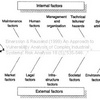
Their newest research report is just out: Resilience Management: A framework for assessing and improving the resilience of Organisations.
There is an intrinsic relationship between organisational resilience and improving the resilience of communities. Enabling the continued operation of organisations, in and following crises, significantly impacts on the medium to long term recovery and health of the wider community. Increased resilience is also important when considering the interconnectedness of modern organisations, where disruptions can have significant and widespread impacts globally. There is increasing demand for organisations to exhibit high reliability in the face of adversity; decision makers must address not only the crises that they know will happen, but also those that they cannot foresee.
The term resilience has been used freely across a wide range of academic disciplines and in many different contexts. There is little consensus regarding what resilience is, what it means for organisations and, more importantly, how organisations might achieve greater resilience in the face of increasing threats. This study offers a definition of resilience that is applicable to organisations.
Resilience is a function of an organisation’s situation awareness, management of keystone vulnerabilities and adaptive capacity in a complex, dynamic and interconnected environment.
The research described in this report looks at ten New Zealand organisations from a range of industry sectors, sizes, localities and types to discover common issues that foster or create barriers to increased resilience. A process for Resilience Management is described for both evaluating and improving an organisation’s resilience.
The full report can be downloaded from the project website.
Downloads
- res.orgs.org.nz: Resilience Management
Links
- resorgs.org.nz: Resilient Organisations
Related
- husdal.com: Can Suply Chain Management learn from Emergency Management
- husdal.com: Resilience Revisited
- husdal.com: Humanitarian and Military Supply Chains must work side-by-side