Blog Archives

JavalancheTM – analyzing hazards to roads

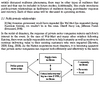
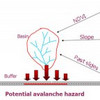
Traditionally, in studying the effect of hazards on roads, a hazard map is prepared based on the hazard in question, the contributing factors and then overlaid with a road map. If the road or a buffer around its vicinity intersects hazard areas, these areas constitute a potential threat. In the approach used in this procedure, imagine traveling along the road and looking to either side for hazards.


Posted in THIS and THAT
Tags: , , ,

Issues in visualization of risk and vulnerability

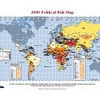
Visualization technology has emerged as a form of exploratory cartography, which can help explain, analyze and communicate risk.

Posted in THIS and THAT
Tags: , , , , , ,

The use of air photos in emergency management

Air photos can capture a lot more information than field surveys can, and can assist in a number of situations. Air photos are a tool which should not be left out in any form of emergency management.

Posted in THIS and THAT
Tags: , ,

ARTICLES and PAPERS
Flexing your SCM muscles
A supply chain is never stronger than its weakest link, and that (having a weak link) is perhaps the[...]
Mitigating supply chain disruptions
How could I have missed this paper? I was preparing my 2009-lecture on supply chain risk for tomorro[...]
BOOKS and BOOK CHAPTERS
Transportation Hazards
This is an updated and extended review of  the Handbook of Transportation Engineering by Myer Kutz ([...]
Book Review: Customs Risk
International trade and global supply chains are filled with goods that are criss-crossing the globe[...]
REPORTS and WHITEPAPERS
Risk management - Vocabulary
What is risk management in supply chains? The more I study supply chain risk management, the more co[...]
28 Global Risks in 2015
The  World Economic Forum Global Risks Reports. I first came across them in 2008, when the hyperopti[...]
from HERE and THERE
Is Your Supply Chain Vulnerable?
Recently I came across a report on Supply Chain Vulnerability published as early as 2002 by the Cran[...]
A crisis is NOT an opportunity
Time to debunk one of biggest and most persistent myths that has plagued crisis management for more [...]