Supply Chain Risk Management: A Neural Network Approach

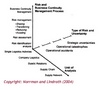
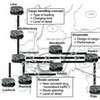
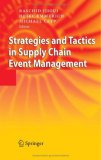
I found a very interesting article by Frank Teuteberg in Strategies and Tactics in Supply Chain Event Management. The article, Supply Chain Risk Management: A Neural Network Approach is interesting to supply chain risk researchers, because it offers a well-written and well-founded and well-illustrated chapter on the theoretical background of supply chain risk management, including a disruption classification and assessment.

Supply chain disruption

Supply chain event management (abbreviated as SCEM) is a consideration of all possible occurring events and factors that can cause a disruption in a supply chain. With SCEM possible scenarios can be created and solutions can be planned. SCEM takes on a more neutral approach to all events, not just focusing on the negative events, as supply chain risk management is likely to imply.

Reference

Teuteberg, F. (2008) Supply Chain Risk Management: A Neural Network Approach. In: Strategies and Tactics in Supply Chain Event Management. Eds. Ijoui R. et al., Springer Verlag, pp. 99-118


Author link

Related

Posted in ARTICLES and PAPERS
Tags: , , , ,

ARTICLES and PAPERS
Toy stories: lessons to be learned
Christmas. Toys. Two things that belong together. But it isn't always a happy story. Not only do sea[...]
Humanitarian aid is better when decentralized
Humanitarian operations rely heavily on logistics in uncertain, risky, and urgent contexts, making t[...]
BOOKS and BOOK CHAPTERS
Book Review: The Full Costs and Benefits of Transportation
This book, The Full Costs and Benefits of Transportation: Contributions to Theory, Method and Measur[...]
Book Review: Heads in the sand
Finally, after 5 days of volcanic ash cloud posting, I can return to my regular topics of supply cha[...]
REPORTS and WHITEPAPERS
Saving Norway's crumbling infrastructure
NTP 2010-2019
Following up my post this morning called "D-Day for Norway's Transport Infrastructure", the numbers [...]
Managing supply chain risk
In September and October 2009 the Economist Intelligence Unit surveyed 500 company executives with r[...]