 Transportation networks, and in particular road networks are an integral part of supply chains, and in regions with sparse networks this road network becomes very important, since in a possible worst-case scenario no suitable alternative exists for deliveries to or from these communities. How are the supply chains of companies located in sparse transportation networks affected by transportation disruptions? What are typical disruptions in certain locations or for certain types of business, and how do businesses and carriers counter supply chain disruptions? Are bad locations synonymous with bad logistics?
Sparse transportation networks
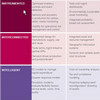
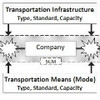
Transportation is perhaps the staple ingredient in supply chains, as I wrote about a couple of weeks ago, and a thought-out transportation provision adds valuable flexibility to supply chains. The consequences and mitigation of supply chain disruptions in sparse transportation networks is the topic of a paper that I will present at the World Conference on Transport Research, WCTR, in Lisbon, Portugal, in July this year, and is based on a 2009 study from Norway, aimed at investigating how businesses and freight carriers located in sparse transportation networks are affected by and relate to supply chain disruptions. The study we conducted indicates that transportation-dependent businesses seek a vertical integration of a freight carrier into their supply chain, while freight carriers establish flexible solutions to meet the contingent needs of different businesses. The study also develops a new framework for the categorization of supply chains, and introduces the notion of the constrained supply chain.
Read online
Bad Locations Bad Logistics by janhusdal
Reference
Husdal, J. & Bråthen, S. (2010). How Norwegian freight carriers handle supply chain disruptions. Paper presented at the World Conference for Transportation Research 2010, Lisbon, Portugal, 11-15 July 2010.
WCTR
wctr2010.info: Offcial WCTR conference website
If you you would like to know more about the background for this study, e.g. the survey questionnaire, or if you are attending the WCTR and would like to link up with me, please get in touch.