Blog Archives

MFworks Tutorial – 02 Network Modelling

The key to producing a successful network model is in understanding the relationship between the characteristics of physical network systems and the representation of those characteristics by the elements of the network model. The efficacy and validity of the network depends on how precisely the network can be modeled to match the real world network it represents. A network can be explicitly modeled in vector GIS, but can only be approximated by a raster GIS like MFworks.
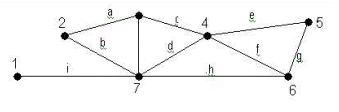
Network representation in vector GIS: Nodes (numbers) and arcs (letters)

A network in vector GIS takes the form of edges (or arcs) connecting pairs of nodes (or vertices). Nodes can be junctions and edges can be segments of a road.

Read more

Posted in mfworks
Tags: ,

ARTICLES and PAPERS
A-maze-ing discoveries
Today's post is on how looking up new articles from reference lists can lead to amazing discoveries,[...]
Supply Chain Security - an overview and research agenda
Supply chain security is one of many components of a company's overall supply chain risk management,[...]
BOOKS and BOOK CHAPTERS
Risk Management in Global Supply Chain Networks
Supply Chain Risks can be classified as either one of these three, Deviation, Disruption or Disaster[...]
One bad apple...
...spoils the barrel? Yesterday I sat down to prepare a review of this book, Managing Risks in Suppl[...]
REPORTS and WHITEPAPERS
When disaster strikes...
...how does the transportation network recover? And why are transportation networks so essential to [...]
The supply chain of the future
A recent report by IBM, referenced by Supply Chain Digest in IBM Lays Out its Vision for the Supply [...]
from HERE and THERE
JavalancheTM – analyzing hazards to roads
Traditionally, in studying the effect of hazards on roads, a hazard map is prepared based on the haz[...]
Business continuity 101
This is the 3rd day with severe transportation and thus supply chain disruptions all over Europe, du[...]