How do you prepare a supply chain for a crisis, and how do you manage a supply chain when the unexpected hits you?

How do you prepare a supply chain for a crisis, and how do you manage a supply chain when the unexpected hits you?
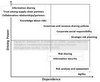
A new framework for the interpretation of supply chain risk mitigation measures? Interpreted structural modelling.
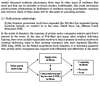
Can public-private partnerships improve community resilience? In order to achieve community resilience public and private owners of critical infrastructures and key resources must work together, before, during and after a disaster.
It is only when the consequences of actions and events are uncertain that these actions and events are truly risky.

The article highlights that information risks are interrelated and that one factor (or “enabler”) cannot be mitigated without taking into account all the other factors that contribute to or are dependent on this factor.
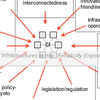
This article presents a new conceptual approach and extended analytical tool for risks in critical infrastructures, and shows how external factors are a major contributor to the risk and interconnectedness of critical infrastructures.
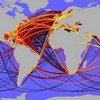
The global network of ships criss-crossing the oceans provide perhaps the most important mode of transportation for the spread of invasive species that “hitch-hike” with these ships.
Does having Small and Medium-sized Enterprises (SMEs) in your supply chain constitute an increased exposure to supply chain risk?
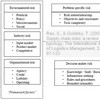
Finally, here it is, the complete review of some 160 or so articles in supply chain risk and risk management.
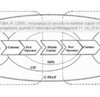
The complex interaction of ports, maritime operations and supply chains creates vulnerabilities that requires analysis that extends beyond the immediate visible.
Little did I know when I started reading this paper that it was written by he who is the editor for Finance in the Journal of Applied Stochastic Models for Business and Industry and who has published 12 books and more than 250 papers on risk management and stochastic modelling in operations, insurance and finance.
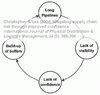
Traditionally, papers on supply chain risk use the “classic” supply-demand-internal-external scheme for classifying supply supply chain risk sources. Christopher and Lee do not. They see risk as primarily related to uncertainty, volatility and turbulence
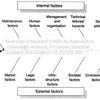
Supply chains are increasingly becoming complex webs and networks and are no longer straightforward chains with just a few links between supplier and customer.
Here, six areas of supply chain risk are highlighted and discussed at length, showing how they are endemic to the extended enterprise, and indeed, a lengthy discussion it is.

Today’s article is actually not an article on it’s own, but an editorial to a special 2009 issue of the Journal of Operations Management, dedicated to supply chain risk.

Today we are going back in time, to one of the seminal articles in road vulnerability. It is a conceptual paper that provides the basis for why road vulnerability needs to be a more important issue .
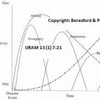
Can commercial logistics’ ideas and solutions work in humanitarian supply chains? No. Why? Well, perhaps they could work, but in most cases they won’t.
Christopher Tang from UCLA talks about three strategies for building a robust supply chain, related to (1) supply, (2) product, and (3) demand.

I’ve said so before, sometimes new articles are found in new and unlikely places and here is a chance to learn something new.

Beer distribution is a sector that will be highly affected by a supply chain disruption…in the UK. You could even say that beer distribution is part of the UK critical infrastructure.