 Yes. No doubt about it. Reduction, Readiness, Response and Recovery are four key elements in the New Zealand Civil Defence Emergency Management Act 2002. But how can this be related to supply chain management? Well, from time to time any supply chain will face the possibility of being disrupted, severed, delayed or severely impacted.
What is resilience?
One major strategy to overcome such disruptions is to ensure that there is sufficient resilience in the supply chain.
Resilience is a function of situation awareness, management of keystone vulnerabilities and adaptive capacity in a complex, dynamic and interconnected environment. (Resilient Organisations Research Report 2007/01)
And the degree to which you are resilient and ready determines your ability to react to, respond to and recover from any supply chain disruption.
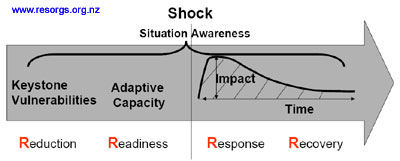
All four elements need to be in place, reducing your key vulnerabilities, being ready to adapt and change your supply chain, responding appropriately to unwanted events and having a clear strategy for how your are going to recover from a major setback is what will set you apart from the rest of the crowd, should “disaster” strike.
Resilient organisations
If you have everything in place, no need to read further, if not, I do recommend you to visit website of the New Zealand research project Resilient Organisations, www.resorgs.org.nz. You can also find useful hints on how to build a resilient supply chain in the article Building a Resilient Supply Chain by Yossi Sheffi in The Harvard Business Online.
Links
- Harvard Business Online: Building a Resilient Supply Chain
- resorgs.org.nz: Resilient Organisations
Related
- husdal.com: How New Zealand develops Resilient Organisations
- husdal.com: Resilience Revisited
- husdal.com: Humanitarian and Military Supply Chains must work side-by-side