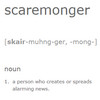
These concepts are often confused, and thus, warrant further explanation. They are distinctively different.

These concepts are often confused, and thus, warrant further explanation. They are distinctively different.
This book is clear and concise, to the point, and constantly switching between risk management in general, supply chain risk, and business continuity, always seeing the whole picture

Kelly Pitera explores and evaluates resiliency efforts currently being used by importing enterprises, focusing on goods movement within the supply chain.
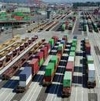
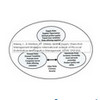
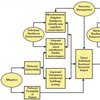
In ‘Structuring a definition of Resilience in the Freight Transportation System’, by Chilan Ta, Kelly Pitera and Anne Goodchild, resilience is defined along three dimensions: Physical Infrastructure, Managing Organization, System Users.
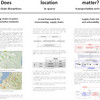
How are companies located in sparse transport networks affected by supply chain disruptions? Are businesses located in regions with sparse transportation networks more prone to supply chain disruptions than businesses located in more favorable locations? Does a sparse transportation network constrain the supply chain setup, such that it is more vulnerable and more likely to be disrupted?

Are you presenting at the TRB 2009, the Transportation Research Board Annual Meeting? Below is the abstract of a paper I will present at TRB2009, the Transportation Research Board 88th Annual Meeting, in Washington, DC, 11-15 January 2009.
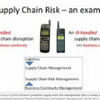
When faced with a supply chain disruption, proactive and reactive supply chain risk management can in fact make or break a company’s existence.
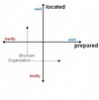
When it comes to a business’ physical location in relation to the functioning of the supply chain, obviously there are good locations and bad locations. Can a business’ organization compensate for that?
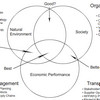
A sustainable supply chain is a supply chain where resources are not just consumed but also replenished, and where business decisions consider long-term overall environmental and societal impacts.

My daily morning routine includes a cup of coffee while watching the World Business Report on BBC World News. Today they had a special report on America’s crumbling and failing infrastructure.
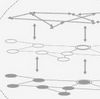
In her article Drivers of supply chain vulnerability: an integrated framework, Helen Peck identifies four drivers of supply chain vulnerability:Value stream, product or processes,Assets and infrastructure dependencies,Organizations and inter-organizational networks,The Environment.
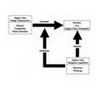
The severity of supply chain disruptions stems from supply chain design characteristics and supply chain mitigation capabilities: Supply Chain Design: supply chain density,supply chain complexity, node criticality. Supply Chain Mitigation Capability: recovery capability, warning capability.
The paper defines the concept of vulnerability as it applies to production systems and is built around three concepts: A taxonomy of vulnerability factors as a basis for or guideline in establishing scenarios.
An input/output model to describe production systems.
A two-step vulnerability analysis for productions systems.
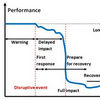
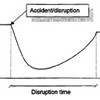
This is tell-tale illustration of what happens when supply chains are disrupted and businesses are impacted. They may, or may not, be able to bounce back to where they were before the event. The survivability of the company depends solely on the company’s resilience towards the disruption.
Edited by Robert B. Handfield, Supply Chain Risk Management: Minimizing Disruptions in Global Sourcing (Resource Management), is not what I thought it would be. Looking at the cover I expected a richly and colorfully illustrated handbook. It is not.
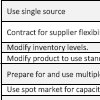
Are you gambling with your supply network? You should be aware that the supply network is inherently vulnerable to disruption and the failure of any one element in it could cause the whole network to fail. Actions to improve security can be classified into three categories: Physical security, Information security, Freight security. Actions to improve resilience can be be divided into: Flexibility, Redundancy.
In contrast to the pre-event character of mitigation, economic resilience emphasizes ingenuity and resourcefulness applied during and after the event. It focuses on the fact that individuals and organizations do not simply react passively or in a “business as usual manner” in the face of a disaster.

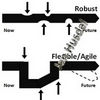
In a previous post I discussed the issue of Flexibility and robustness to reduce risk and uncertainty. Since then a new term has emerged: resilience, and today I will take a look at that.
To make the supply chain more resilient, businesses need to do more than just think about the problem; they must prepare to act effectively, and find the optimal tradeoff between disruption costs and mitigation costs.
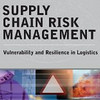
This excellent book by Donald Waters offers a comprehensive overview of many important issues in managing supply chain risk. More than 15 case studies and a straightforward hands-on practical approach make this book an enjoyable read. I almost forgot that I bought this book as a text book.